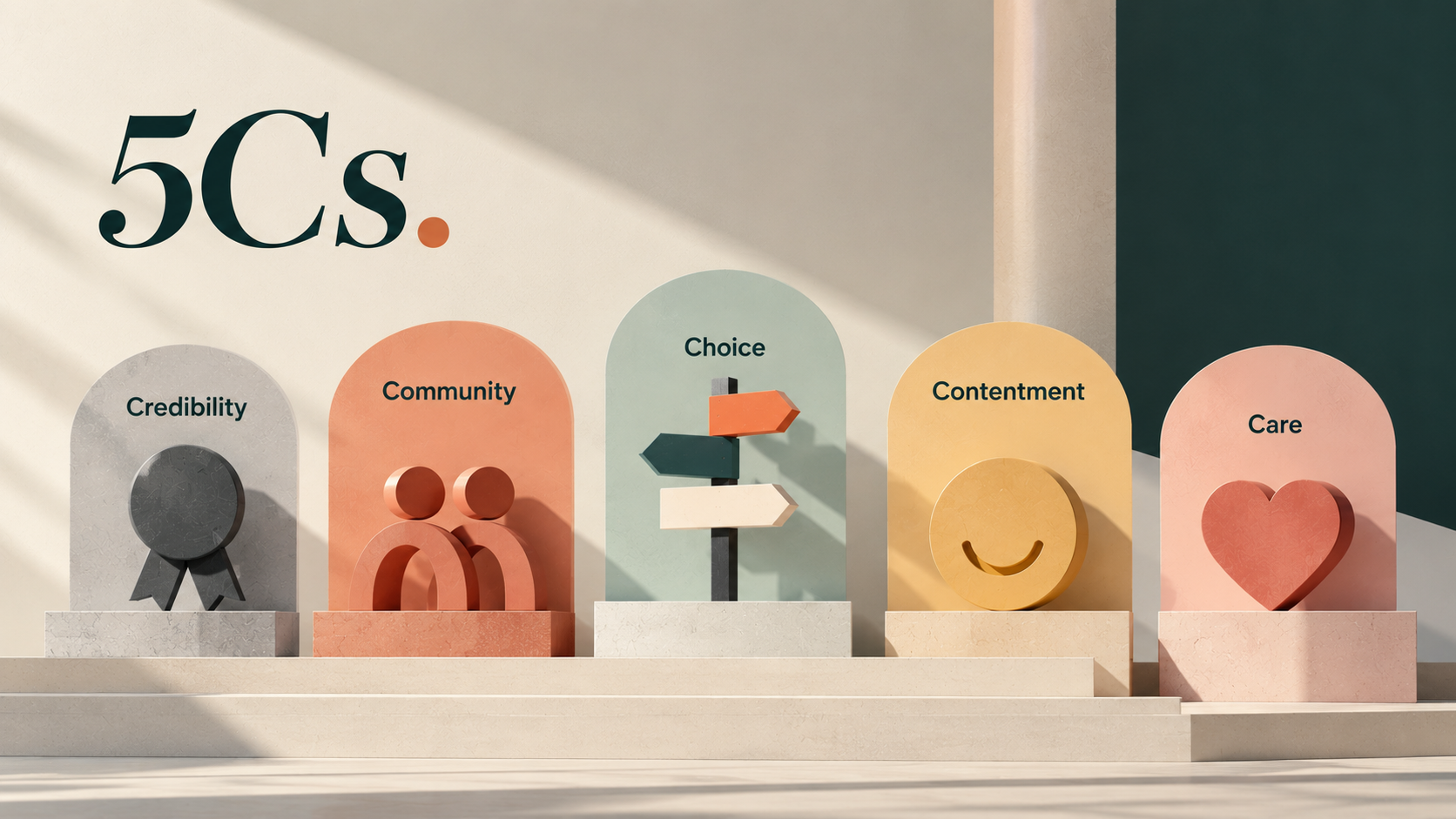
When was the last time you heard someone talk about the 5Cs? Cash, car, credit card, condominium and country club once summed up what it meant to make it in Singapore, yet these days they rarely come up, whether over dinner with friends, in the office or in the conversations we have with the people we create content for. That doesn’t mean Singaporeans have stopped wanting a good life. If anything, they seem to have become far more thoughtful about what a good life actually looks like, and that’s something every brand should be paying attention to.
Where the 5Cs came from
The 5Cs became shorthand for a particular kind of Singaporean success during the years of rapid economic growth, when owning visible markers of prosperity was a clear sign that you had made it. A car meant freedom in a country where cars were famously expensive, a condominium meant you had moved beyond the HDB flat, a credit card meant financial standing and a country club membership showed you had arrived socially. It was a simple, shared checklist, and for many families it captured a genuine pride in how far the country, and their own household, had come.
That checklist shaped advertising for decades too, with banks, property developers, car brands and lifestyle brands all speaking its language and selling success as something you could own and display. Which raises a question we find ourselves asking more and more often, namely whether that language still reflects what Singaporeans actually want for themselves.
What’s changed
From what we see in our work, the answer is increasingly no, and the research seems to agree. Deloitte’s 2025 Gen Z and Millennial Survey found that only 8% of Gen Zs and 9% of millennials in Singapore see reaching a leadership position as their main career goal, with cost of living now their biggest concern. Even the home, perhaps the most enduring part of the dream, has taken on a new meaning, as ERA’s 2025 survey found that most young Singaporeans still want to own one, but increasingly as a reflection of their independence and personality rather than as a status symbol. The ambition hasn’t gone anywhere, it has simply been pointed in a different direction.
Success just looks different now, it’s not abandoned
It would be a mistake to read any of this as Singaporeans giving up on ambition. They’re as practical as they’ve ever been, still focused on financial security and still keen to own a home. What has changed is where status lives, and it has moved away from what people own and towards how they live, from the car in the carpark to the trip they took, the run club they joined, the skill they picked up or the flexibility they’ve built into their week.
Cost-of-living pressure is part of this story too, and it deserves to be said plainly. When some of the traditional markers of success feel further out of reach, it’s only natural for people to find meaning and pride in what’s more within their control, such as their health, their relationships, their growth and the experiences they choose to invest in. Success has become more personal and less uniform, which is genuinely encouraging, because more Singaporeans now seem to be defining it on their own terms rather than against a shared checklist.
Throwing in our take on the new 5Cs
As an agency, we’re constantly fascinated by the people we create for, and always on the lookout for insights into what audiences really care about, since that’s where every good piece of work begins. So when we noticed how rarely the old 5Cs come up anymore, whether in conversations with friends, colleagues or the people we meet through our work, we couldn’t resist asking what has taken their place.
Drawing on the audience insights we gather in our work and the research we follow, here’s our take on what the new 5Cs look like.
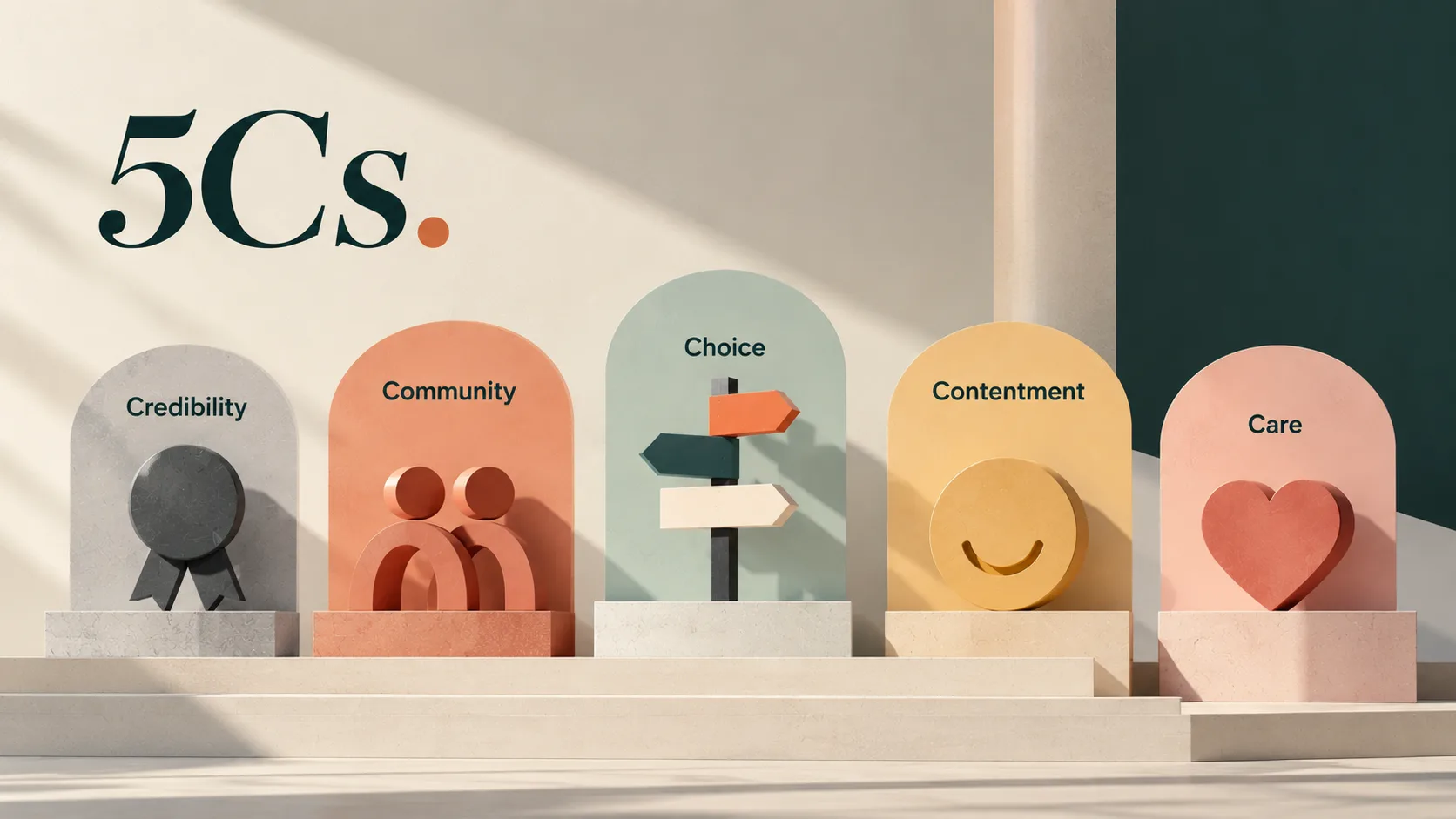
Credibility. Career still matters, but the job title alone no longer carries the weight it once did. What people value now is the visibility of their work, being recognised for what they know and what they’ve built, whether through a strong professional reputation, a side project people talk about or a voice others trust in their field.
Community. A real sense of belonging has become one of the most sought-after things in Singapore life. People find it almost anywhere, from a Saturday morning run club to a K-pop fan group, or a Hyrox relay team, and what matters is having others who share their interests and show up for each other.
Choice. Perhaps the most important of all is the autonomy to decide what success means to each person. Instead of following a single shared checklist, more Singaporeans are giving themselves permission to define a good life on their own terms, whatever that looks like.
Contentment. With so many lives on display in their feeds, it’s easy for people to measure themselves against everyone else. Contentment is about finding ways to stop comparing and to find happiness in what they already have, rather than always chasing the next upgrade.
Care. Finally, success increasingly means getting the balance of care right, looking after themselves, their families, including ageing parents, and their mental wellbeing, without letting any one of them crowd out the others.
These five are our own view, shaped by what we see in our work and the sources we follow, and they’re by no means the final word. Every brand’s core audience is different, and the Cs that matter most to a mid-career professional in the CBD may look quite different from those of a young parent in Punggol or a retiree in Ang Mo Kio, which is exactly why understanding your own audience matters so much.
What do you think? Do these 5Cs ring true for you, or would you swap one out for something else? Drop us a comment, and if you’d like to explore what the new 5Cs mean for your own audience, get in touch with us.
What this means for brands
For brands, the most interesting part of this shift is how much of the old language of aspiration still lingers in messaging. Success is often still shown as the bigger car, the corner office or the luxury purchase, when many of the people watching are measuring their own lives by very different standards. That gap is easy to miss from inside a brand, but audiences notice it, and it can make a brand feel like it’s speaking to a Singapore that no longer quite exists.
The brands that feel most relevant right now tend to recognise that aspiration has become more varied and more personal. They show success as balance, growth, connection and meaningful experiences, and they’re honest about the pressures people face rather than glossing over them. Interestingly, this applies just as much to brands whose products once sat squarely within the 5Cs. A bank, a property developer or a car brand can still be aspirational, but the story increasingly needs to be about the life the product makes possible rather than the status it signals.
Keeping up with what Singapore actually wants, and why LOKi
For brands, keeping up with that shift is the difference between content that feels aspirational and content that feels like it belongs to another era.
At LOKi, we believe strong creative starts with understanding the culture it lands in. We pay close attention to how Singaporeans are changing, from what they value and how they spend their time to what success and status now mean to them, and we bring that understanding into every strategy, campaign and piece of content we create. It’s how we help brands sound like they genuinely know the people they’re talking to.
If you’d like to explore how your brand’s story fits the Singapore of today, get in touch with us and we’d be glad to talk it through. You can also see some of our work or find out more about LOKi.
Frequently asked questions
What are LOKi’s new 5Cs?
Our take on the new 5Cs is Credibility, Community, Choice, Contentment and Care. They reflect a shift towards being recognised for one’s work, finding a sense of belonging, having the autonomy to define success, finding happiness without comparison and balancing care for oneself, one’s family and one’s mental wellbeing.
How did LOKi arrive at the new 5Cs?
They come from the audience insights we gather through our work, including the conversations we have with real people on shoots and in interviews, the comments and messages we see while managing brand communities, and what we learn from how content performs. We combine that with the research and reporting we follow on how Singaporeans live today. They’re our opinion rather than the result of a formal survey, which is why we’d love to hear whether they ring true for you. 🙂
How can I start understanding my own audience better?
Start by listening. Read the comments, messages and reviews your brand already receives, talk to a handful of real customers about what matters to them, and look at the communities and conversations they’re part of outside your brand. It also helps to question your own assumptions, especially about what success and aspiration mean to the people you’re trying to reach. From there, those insights can shape your strategy and content, and if you’d like support, that’s exactly the kind of work we do at LOKi.
Do the new 5Cs apply to every audience?
Not in the same way. They’re our own view, drawn from audience insights and the sources we follow, and every brand’s core audience will weigh them differently, which is why it’s worth understanding what success means to the specific people you want to reach.
Why should brands care about how Singaporeans define success?
Because aspiration sits at the heart of so much marketing. If a brand’s idea of success no longer matches how its audience sees it, even a well-made campaign can feel out of touch, while one that reflects what people genuinely value is far more likely to connect.
How can LOKi help brands understand their audience?
LOKi is an independent digital creative agency working with brands in Singapore, and audience insight sits at the heart of how we develop strategy, campaigns and content. You can explore our work here, find out more about us or start a conversation about your brand.