
Think about how often you actually scroll down a page of Google results these days, versus how often you just read the AI Overview at the top and move on. Or think about where people go for recommendations now. For a lot of organic, everyday discovery, TikTok has already overtaken Instagram, because Instagram was never built for search the way TikTok has become. For everything else, the AI answer sitting right there in the browser is simply the easier hit.

That shift is exactly what’s happening in search more broadly, and it means something specific for marketers: there’s now more surface area to optimise for, and more surface area to compete on for your brand’s visibility.
Not long ago, finding a digital marketing agency, a restaurant for a client dinner, or a financial product to compare meant opening Google, typing a query, and clicking through the first few results. That behaviour is changing faster than most marketing teams have noticed. A growing share of those same searches now begin with a question asked to an AI, whether that’s ChatGPT, Perplexity, Google AI Overviews, or Gemini, and the answer that comes back isn’t a list of ten blue links. It’s a direct, synthesised response, often with a recommendation, and sometimes with no link to any brand’s website at all.
For brands that have spent years building their Google rankings, this isn’t a small adjustment. It’s a structural shift in how discovery works, and the brands still treating it as a distant future trend are already behind.
What Is AI Search, and How Is It Different From Google?
Traditional search works like a library index. You type a query, the engine retrieves a ranked list of pages, and you decide which one to click. The brand’s job is to appear as high up that list as possible.
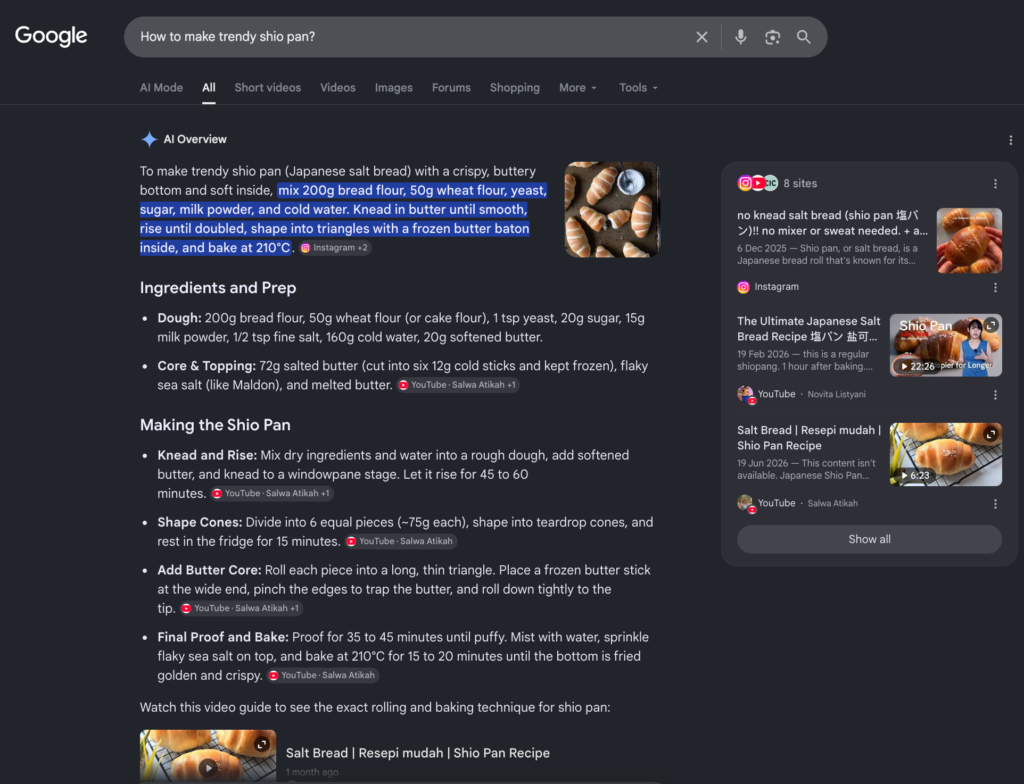
AI search works differently. Instead of returning a list, it reads across many sources simultaneously and synthesises an answer. It doesn’t just point you to a page, it tells you what the page says, often in its own words, and sometimes without requiring you to visit the page at all.
Here are the key platforms reshaping search in 2026:
| Platform | What It Does |
| ChatGPT | Conversational AI that answers queries, summarises information, and increasingly recommends brands and products |
| Google AI Overviews | AI-generated summaries that appear above traditional search results on Google |
| Perplexity | Real-time AI search engine that cites sources directly and rewards structured, authoritative content |
| Gemini | Google’s AI assistant, integrated across Search, Gmail, and Workspace |
| Claude | AI assistant growing rapidly, now the second-largest AI referral source for brands |
The critical difference from traditional search is this: AI search answers the question, while traditional search points to the answer. For brands, that means visibility is no longer just about ranking, it’s about being cited, referenced, and recommended by the AI itself.
How Singapore Consumers Are Already Using AI Search
Singapore isn’t a market waiting for AI search to arrive. It’s already one of the most advanced AI adoption markets in the world, with Singaporeans among the earliest and most consistent adopters of AI tools globally, spanning age groups, income levels, and industries.
B2B buyers here are increasingly using AI tools to research vendors, compare options, and build shortlists, often well before any human conversation with a supplier begins. Consumer research behaviour has shifted too, with AI platforms now used alongside, and sometimes ahead of, brand websites and online reviews as a primary source of product and service recommendations.
Here’s what that looks like in practice. A marketing manager looking for an agency no longer only searches Google. They ask ChatGPT to compare agency types, use Perplexity to find specialists, and check Google AI Overviews before clicking anything, so by the time they visit a brand’s website, the shortlist has often already been shaped by AI. A consumer researching a skincare product asks their AI assistant which ingredients to look for, which brands are consistently recommended, and where to buy, and the brand that appears in that AI response has an enormous advantage over one that doesn’t.
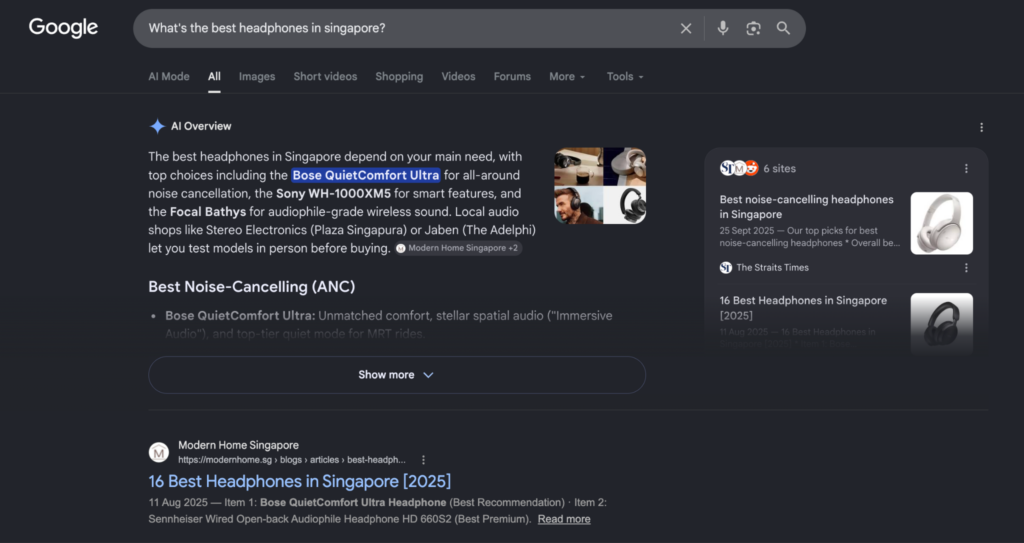
What This Means for Your Brand’s Visibility
Here’s the part most brands are missing.
Zero-click is the new normal. A growing share of Google searches now end without any click to an external website, and when Google’s AI Mode is active, that figure is significantly higher. The traffic that brands built their growth strategies around is quietly declining, not because their rankings dropped, but because the search behaviour above them changed.
AI citations aren’t the same as search rankings either. A brand can rank well on Google and still be invisible in AI search, and vice versa. These are two different visibility systems, and most brands are only optimising for one.
There’s also a quality difference worth noting. AI referral traffic is smaller in volume than traditional search traffic, but visitors arriving from AI search tools spend more time on websites and convert at higher rates. The volume is still catching up, but it’s growing quickly, and the quality of that traffic is meaningfully better.
Put those together and the real risk becomes clear. For brands not showing up in AI responses, the research phase that leads to a purchase decision is happening in a channel where the brand has no presence. The consumer asks, the AI answers, and if the brand isn’t part of that answer, it isn’t part of the consideration set.
The Opportunity: How to Make Your Brand the One AI Cites
This is where the picture shifts from cautionary to actionable. AI search rewards a specific kind of brand presence, one that most brands in Singapore haven’t yet invested in. The brands winning AI citations share characteristics that have less to do with technical SEO and more to do with content quality, brand clarity, and consistent authority.
What AI search actually rewards starts with authoritative, specific content. AI systems prefer content that answers questions clearly and specifically, so generic brand pages and thin product descriptions rarely get cited while detailed guides, comparison content, and expert perspectives do. Structure matters too, since introductions that answer the question directly before elaborating get cited more often than content that buries the point further down the page. Freshness plays a role as well, because AI platforms favour more recently updated content, which makes keeping pages current not just good practice but an actual visibility signal.
Consistency across sources is another factor AI systems weigh heavily. They cross-reference multiple sources before forming an answer, so a brand that appears consistently across its website, third-party publications, social platforms, and authoritative directories is more likely to be cited than one whose presence is limited to a single channel. And underneath all of this sits brand clarity. Brands with clear, specific positioning are simply easier for AI to describe and recommend, while brands trying to be everything to everyone are harder to cite with any confidence.
What Brands Should Do Differently: A Practical Guide
These aren’t technical SEO instructions. They’re strategic decisions any brand in Singapore can begin acting on now.
1. Audit what AI currently says about your brand
Ask ChatGPT, Perplexity, and Gemini to describe your brand, recommend agencies in your category, or compare you to competitors. Note what comes back, whether your brand appears, how it’s described, and whether that description is accurate and favourable. This is your AI visibility baseline, and most brands have never done it. Doing it puts you ahead of the majority of your competitors.
2. Create content that answers real questions directly
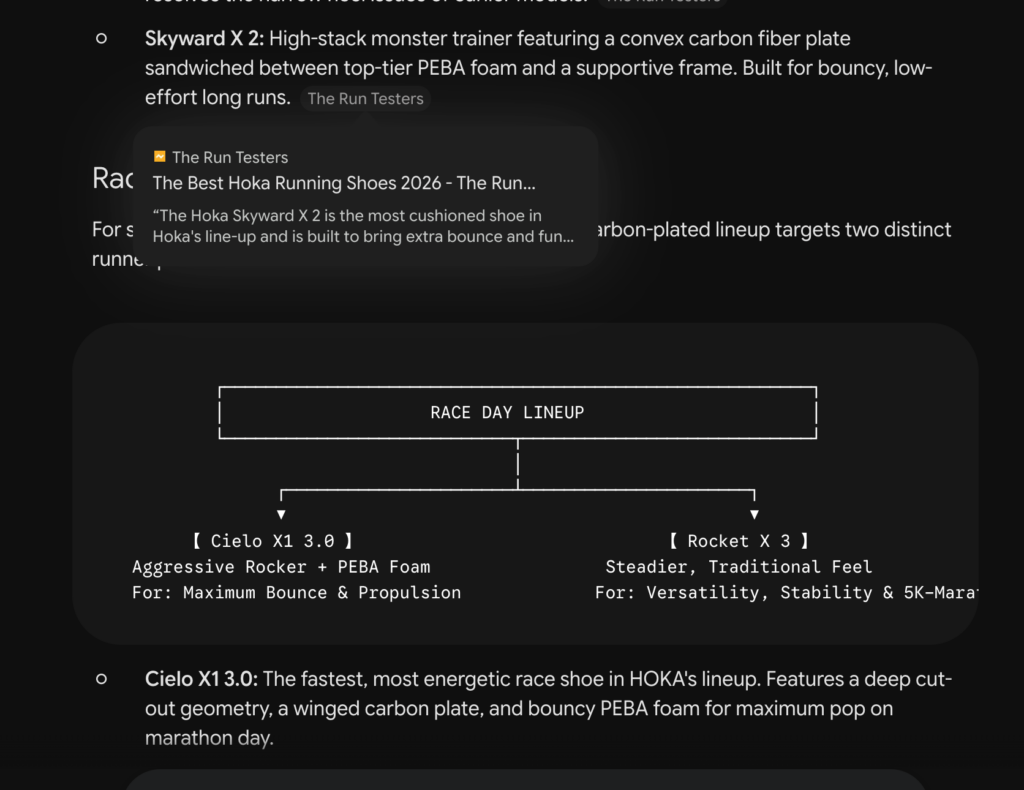
Identify the questions your audience is actually asking about your category, not just the keywords they’re searching for. Write content that answers those questions clearly and specifically, with direct answers early, structured headings, and no unnecessary preamble. Comparison, “best of,” and “vs” content formats tend to drive strong AI citation rates, so these are worth prioritising.
3. Build authority across multiple sources
A brand that only exists on its own website is a single data point for an AI system. Earn mentions, citations, and references on industry publications, partner websites, authoritative directories, and social platforms. For Singapore brands, this includes local business directories, industry associations, and regional publications.
4. Update existing content regularly
AI platforms favour fresher content, so keeping pages current with new information, examples, and context improves AI visibility. A well-maintained existing article is often more valuable than a brand new one.
5. Make your brand easy for AI to describe
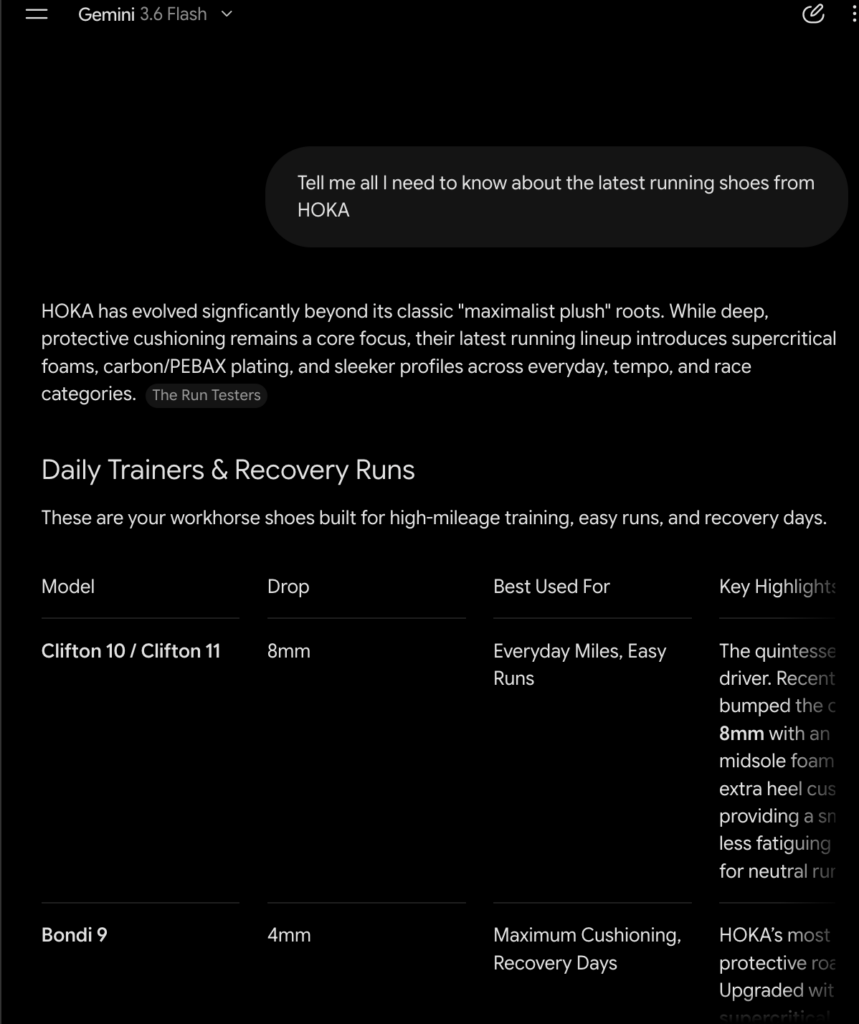
Brands with clear, specific positioning are cited more confidently, because the AI can describe them precisely. Review how your brand describes itself across your website, social profiles, and published content, and check whether that positioning is consistent and specific enough to hold up in a comparison. Vague positioning like “we make good shoes” is harder for AI to work with than something specific, like “we are a performance running shoe brand built around maximalist cushioning and stability for long-distance runners,” the way a brand like HOKOA might position itself.
6. Do not abandon traditional SEO
Traditional search authority and AI visibility aren’t separate. Brands that perform well in one tend to perform well in the other, so the right move is to extend your existing SEO strategy into AI optimisation, not replace one with the other.
What to Stop Doing in Response to AI Search
Stop assuming your Google ranking tells the whole story. A strong organic ranking is still valuable, but it no longer captures the full picture of your brand’s digital visibility, which means AI citation tracking now belongs in your measurement framework alongside traditional rank tracking.
Stop producing content volume for its own sake as well. AI search rewards depth and specificity, so a smaller number of well-researched, clearly structured articles will generate more AI citations than a high volume of thin posts written to hit a publishing schedule. And stop treating AI search as a separate strategy altogether. The brands winning in AI search are doing the same things that have always built brand authority, clear positioning, quality content, and consistent presence, just structured in a way that AI can read and cite.
Most of all, stop waiting for certainty. AI search is evolving rapidly and no one has a complete playbook. The brands moving now are building a head start that compounds, while the brands waiting for the strategy to stabilise are ceding ground every month.
Frequently Asked Questions
Is AI search replacing Google in Singapore?
Not entirely. Traditional search is still a major part of how people find information, but a growing share of queries now start or end with an AI tool instead. The two are increasingly used together rather than one replacing the other.
Does AI search affect B2B and B2C brands differently?
Both are affected, but the stakes look different. B2B buyers are using AI tools earlier in a longer research process to build vendor shortlists, while B2C consumers are using AI for faster, more immediate product recommendations and comparisons.
What is the difference between SEO and AI search optimisation?
SEO focuses on ranking your pages highly in traditional search results. AI search optimisation focuses on being cited and recommended within an AI-generated answer, which depends more on content clarity, structure, and authority than on keyword targeting alone.
How do I know if my brand is showing up in AI search?
Ask the major platforms directly. Query ChatGPT, Perplexity, and Gemini for recommendations in your category and see whether your brand appears, how it’s described, and how that compares to your competitors.
How quickly can a brand improve its AI search visibility?
There’s no fixed timeline, since it depends on your starting point and how much authoritative content and third-party presence you already have. Brands that start auditing and adjusting now build an advantage that compounds over the months ahead.
Does LOKi help brands optimise for AI search?
Yes. LOKi works with brands across Singapore and Malaysia to build the brand clarity, content, and cross-channel authority that AI search rewards.
In Summary
The brands that will be most visible in Singapore’s digital market over the next three to five years are not necessarily the ones with the biggest paid media budgets. They are the ones that invested early in building a brand presence that is clear enough, specific enough, and authoritative enough to be recommended, by a human, by a search engine, or by an AI.
AI search has not replaced the fundamentals of good marketing. It has made them more valuable. A brand that knows what it stands for, says it consistently, and builds genuine authority in its category will win in AI search for the same reason it wins everywhere else.
At LOKi, that is where we start, with the brand, before the channel. If you want to build a presence in Singapore that works across every surface your audience uses, start the conversation with us.