
At a glance
- Most Singapore brands are still spending the majority of their marketing budget chasing immediate results through paid channels, and the numbers look good until the spend stops, at which point everything stops with it.
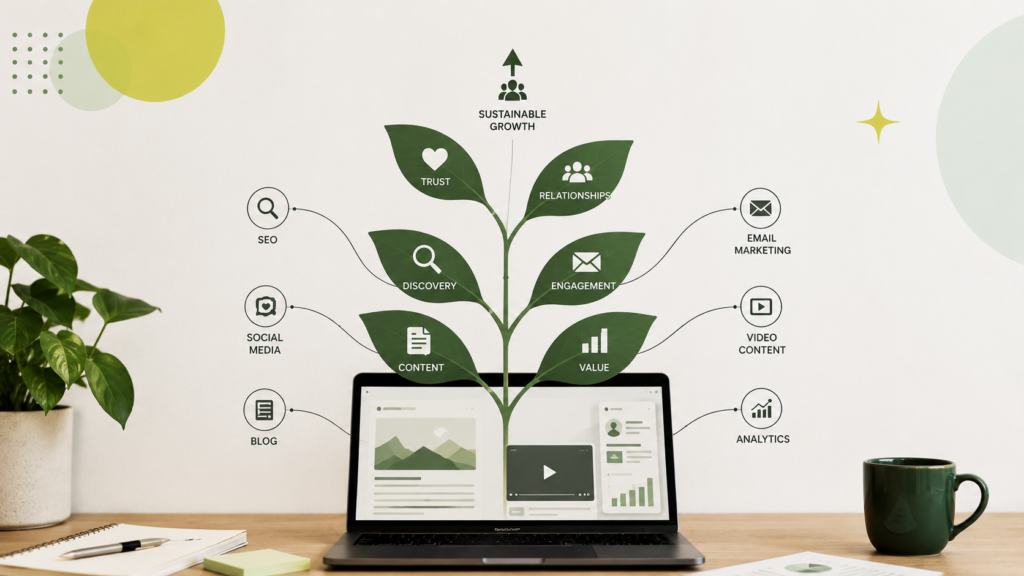
- Inbound marketing works differently. Instead of buying attention every month, you build content and presence that keeps working long after it is published, so every article, video, or campaign continues generating value on its own.
- For Singapore brands, this is one of the most cost-efficient ways to build brand equity and generate leads at the same time, especially as ad costs keep climbing and audiences grow more resistant to being interrupted.
- This guide walks through what inbound marketing actually is, how it plays out differently for B2B versus B2C brands, and how to put together a strategy that fits wherever your brand is right now.
As a brand or a marketer, you want results that justify your effort, and playing the long game of building brand equity can feel like a journey with no immediate payoff. So what do most people do instead? They spend the ad dollars. They push their message across whatever channels their audience is on, maybe throw in a discount for good measure, and watch the spike come in. The numbers look great. Job done, right?
Then the month after that happens. And the year after that. And you find yourself relying on the same spend, or more of it, just to hold the same ground.
The question worth asking is what happens when your ad spend does more than deliver a short-term surge, when it also builds something that compounds and feeds every future effort you make. That is where strategy, creative, and paid media need to work together rather than in separate lanes. Ad costs are only going to keep rising globally, but the brands making the most of that pressure are the ones building a searchable, trusted presence in their market that does not disappear the moment the budget does. Let us get into how.

What Is Inbound Marketing?
Inbound marketing is a strategy built around attracting potential customers through content and experiences that genuinely serve their needs, rather than pushing advertising in front of them and hoping it lands.
The logic behind it is simple. When someone has a problem, they go looking for a solution. If your brand shows up with content that actually helps, you have built trust before any sales conversation has even started. By the time that person is ready to buy, your brand is already familiar, credible, and top of mind.
It helps to be clear on what inbound marketing is not, too:
- It is not just blogging. Blogging is one channel inside a much broader system.
- It is not a replacement for paid marketing. The two work best when they support each other.
- It is not a quick win. Inbound builds momentum over six to twelve months, and then it compounds.
Inbound marketing drives voluntary interaction with your brand as a result of the recognition you have already built. It is a highly effective strategy, but it is also a time-consuming one if the planning only happens after the fact. When a brand offers real value instead of just repeating its benefits and features at people, it gives audiences a reason to develop an actual relationship with the brand. That relationship is what turns into inbound leads down the line.
Inbound vs Outbound: What Is the Real Difference?
| Outbound Marketing | Inbound Marketing | |
| How it works | Pushes messages at an audience | Attracts an audience through value |
| Examples | TV ads, cold calls, display ads, paid search | Blog posts, SEO, social content, email newsletters |
| Cost over time | Increases as competition for ad inventory grows | Decreases as content authority compounds |
| When results appear | Immediately, but stops when spend stops | Takes 6 to 12 months to build, then accelerates |
| Audience relationship | Transactional, reached by interruption | Trust-based, found through genuine interest |
| Best for | Immediate lead generation, product launches, retargeting | Long-term brand building, organic traffic, authority |
| Singapore context | Dominant model for most brands, high CPCs | Underutilised, significant competitive white space |
The most effective approach for Singapore brands was never really a choice between the two. It is a deliberate combination, where outbound delivers near-term results while inbound builds the long-term foundation that makes every future campaign cheaper and more effective.
How Does Inbound Marketing Actually Work?
Inbound follows a three-stage methodology that mirrors the buyer’s journey.
Stage 1: Attract
This stage is about drawing the right people to your brand through content they are already searching for. It looks like SEO-optimised blog posts, social media content, short-form video, thought leadership articles, and podcast appearances, all aimed at relevant traffic from people who actually match your ideal customer profile. The key principle here is the right people, not the maximum number of people. Inbound is not about mass reach, it is about reaching the audience that matters with content that is genuinely useful to them.
Stage 2: Engage
Here, you convert interest into a relationship by offering something of value in exchange for trust. It looks like lead magnets such as guides, checklists, and templates, email newsletters, gated content, webinars, and community engagement, all working toward the same goal of turning anonymous visitors into known contacts you can nurture over time. The offer needs to match the intent. Someone reading an awareness-stage article is not ready for a sales call, so give them an educational resource first.
Stage 3: Delight
This is where customers turn into advocates who refer others and amplify your brand organically. It looks like post-purchase content, loyalty programmes, CRM-driven personalisation, community building, and user-generated content, all in service of retention and referral, since happy customers become your most credible marketing channel. Inbound does not end at conversion. The delight stage feeds straight back into the attract stage through word-of-mouth and social proof.
What Does Inbound Look Like for B2B vs B2C Brands in Singapore?
The core principles of attract, engage, and delight apply across both B2B and B2C. What changes is the tactics, the timeline, and the channels you lean on.
| Dimension | B2B Inbound | B2C Inbound |
| Primary goal | Lead generation, pipeline, sales qualification | Brand awareness, consideration, purchase |
| Sales cycle | Long, weeks to months, multiple decision-makers | Short, hours to days, individual decision |
| Content types | Whitepapers, case studies, webinars, LinkedIn articles, industry reports | Blog posts, short-form video, social content, email, influencer content |
| Primary channels | LinkedIn, Google Search, email nurture, webinars | Instagram, TikTok, YouTube, Google Search, email |
| Lead capture | Gated content, contact forms, consultation requests | Newsletter sign-ups, social follows, loyalty programmes |
| Nurture approach | Email sequences mapped to sales stages | Content journeys mapped to purchase intent |
| Success metrics | Qualified leads, total sales opportunity value, cost per lead, customer acquisition cost | Brand recall, social engagement, conversion rate, repeat purchase |
For B2B brands in Singapore, content needs to speak to the specific business challenges your target decision-maker is facing, not just describe what your product does. LinkedIn remains the primary distribution channel for B2B thought leadership, with document ads and thought leader ads consistently driving strong engagement. And B2B buyers here complete roughly 70% of their purchase research on their own before they ever contact a vendor, which means showing up during that research phase is not optional anymore.
For B2C brands in Singapore, inbound leans heavily on social media as both a distribution and discovery channel, particularly TikTok, Instagram, and YouTube. Authenticity is what drives the connection, since Singapore’s B2C consumers respond more strongly to real, human storytelling than to polished brand content. Social commerce is accelerating here too, with TikTok Shop and Instagram Shopping letting people discover and purchase within a single platform, and short-form video remains the highest-ROI content format for B2C inbound in this market.
The Core Channels of an Inbound Strategy in Singapore
SEO and Content Marketing
Without organic search visibility, content has no reliable way to reach anyone. SEO and a solid content marketing plan is the foundation of any inbound strategy.
It involves keyword research mapped to buyer intent, on-page optimisation, pillar pages and cluster articles, technical SEO, and local SEO. The process matters because inbound leads cost significantly less than outbound leads and convert at higher rates, since they’ve already self-qualified through the content they’ve consumed before ever reaching your brand.
In Singapore, that also means optimising for both traditional Google search and emerging AI search tools like ChatGPT, Perplexity, and Google AI Overviews, since AI-driven search is intercepting a growing share of informational queries before people ever land on a website.
Social Media
In the inbound context, social media is not just a place to post content. It’s a distribution channel and a platform for building brand authority.
For B2B, LinkedIn is primary, so publish thought leadership, engage with your audience’s content, and use it to distribute your articles and case studies. For B2C, TikTok, Instagram, and YouTube dominate, with short-form video driving discovery and community management deepening the relationship after someone follows you.
Across both, consistency matters more than volume. A brand that shows up reliably with useful, on-brand content builds far more trust than one that posts often but inconsistently.
How to Build an Inbound Marketing Strategy, Step by Step
Step 1: Define your audience with specificity
Go beyond demographics and get specific about who the real person is that you are trying to reach. What do they believe? What frustrates them? What are they actually searching for, and what would make them trust your brand?
- For B2B, build buyer personas by role, industry, company size, and buying stage
- For B2C, build audience profiles by behaviour, interest, purchase trigger, and platform habit
Step 2: Map content to the buyer journey
At the awareness stage, content should answer the broad questions your audience is already asking, like blog posts, social content, and short-form video. At the consideration stage, it should help them evaluate their options, like comparison guides, case studies, and webinars. And at the decision stage, it should remove the last barrier to conversion, like testimonials, pricing guides, and free trials.
Step 3: Choose your primary channels
Do not try to be everywhere at once. Choose two or three channels where your audience is genuinely active and commit to them properly. For B2B, that usually means LinkedIn, Google Search, and email. For B2C, it is more likely to be TikTok or Instagram, Google Search, and email. From there, build outward from your strongest channel as the programme matures.
Step 4: Build a content production system
Inbound requires consistent output over time, which means you need an actual production system rather than just a content calendar. Define your content types, publishing frequency, briefing process, and review process, and be clear on who owns each step. The system does not need to be complex, it just needs to be sustainable.
Step 5: Measure what matters
Avoid the trap of measuring activity, like posts published or emails sent, instead of outcomes like organic traffic growth, lead quality, conversion rate, and pipeline generated. Set 90-day and 12-month benchmarks at the start of the programme, because inbound takes time to build, and without benchmarks that slow start can look like failure when it is actually completely normal. Track both brand metrics, like awareness and search share of voice, alongside performance metrics like leads, cost per lead, and customer acquisition cost.
Common Inbound Marketing Mistakes Singapore Brands Make
- Starting with content before the audience is defined. Publishing without a clear picture of who you are writing for produces content that speaks to everyone and resonates with no one.
- Treating inbound and paid as separate strategies. The most effective programmes use paid media to accelerate inbound content, promoting high-performing articles, retargeting content readers with relevant offers, and using paid to test messaging before investing further in organic.
- Measuring too early. Inbound typically takes six to twelve months before meaningful traction appears. Brands that evaluate the programme after eight weeks and decide it is not working are cutting off a compounding investment before it ever gets the chance to compound.
- Producing content without distribution. A blog post with no SEO optimisation, no social distribution, and no email promotion is a tree falling in an empty forest. It exists, but no one finds it.
- Forgetting the delight stage. Most inbound programmes invest heavily in attracting and engaging, then neglect the customers they have already won. The delight stage, turning customers into advocates, is the part of inbound that costs the least and compounds the most.
Frequently Asked Questions
How long does inbound marketing take to work in Singapore?
Most brands start seeing meaningful traction between six and twelve months in, though early signals like organic traffic growth and search visibility can show up sooner. The compounding effect is what takes time to build.
Is inbound marketing better for B2B or B2C brands in Singapore?
Neither is inherently better. The principles are the same, but the channels and timelines differ. B2B tends to lean on LinkedIn and longer nurture sequences, while B2C leans on short-form video and faster purchase cycles.
How much does an inbound marketing strategy cost in Singapore?
Cost depends heavily on scope, from content volume to channel mix to whether you are building in-house capability or working with an agency. What matters more than the number itself is treating it as a long-term investment rather than a campaign spend.
Do I need to stop running paid ads to do inbound marketing?
No. The two work best together. Paid can accelerate inbound content and test messaging, while inbound builds the long-term foundation that makes every paid campaign more effective over time.
What type of content works best for inbound marketing in Singapore?
It depends on your audience and stage. B2B brands tend to see the most traction from thought leadership, case studies, and LinkedIn content, while B2C brands see stronger results from short-form video and social content.
Can a small or mid-size brand in Singapore do inbound marketing effectively?
Yes. Inbound does not require a massive budget, it requires consistency and a clear understanding of your audience. Smaller brands often move faster because they can commit to a focused channel strategy rather than spreading themselves thin.
Does LOKi help brands build inbound marketing strategies in Singapore?
Yes. LOKi works with brands across Singapore and Malaysia to build inbound strategies from the ground up, from audience definition through to content systems and channel strategy.
If you made it this far in the article, we know you want more.
Inbound marketing is not a tactic. It is a structural decision about how your brand chooses to grow, whether you earn attention or buy it, and whether you are building something that compounds or something that resets every quarter.
For Singapore brands operating in a market where ad costs keep rising, consumer scepticism is high, and the brands that win long-term are the ones with the clearest and most useful presence in their category, inbound is not really a strategic option anymore. It is a strategic necessity.
At LOKi, we build inbound strategies from the brand outward, starting with who you are and what you have to say, then building the content system and channel strategy that gets it in front of the right people. If you are ready to build something that lasts, start the conversation with us.