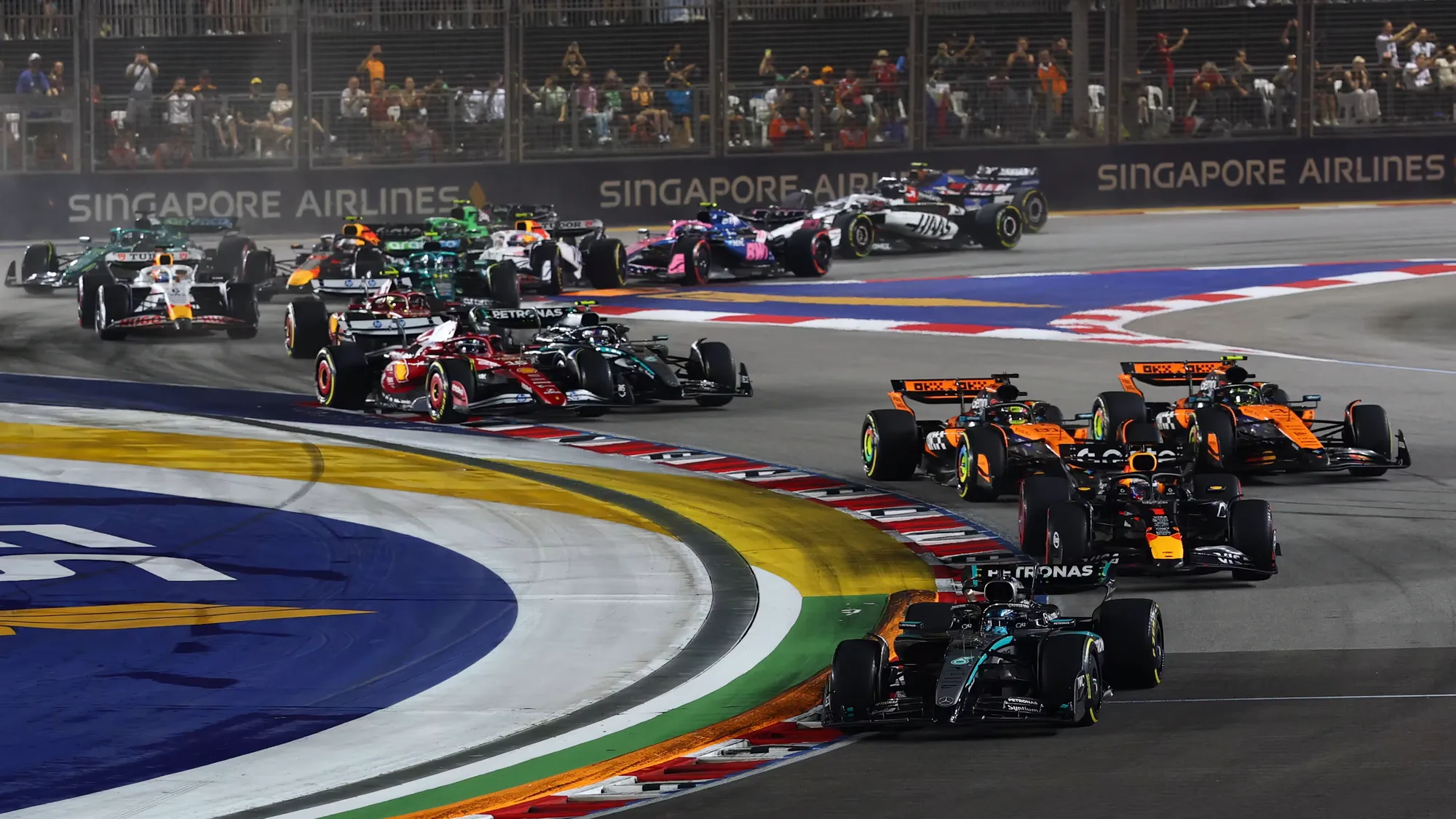
Within a single fortnight, Singapore is hosting the world’s largest crypto event, one of its most prestigious gatherings of chief executives, a Hans Zimmer concert, two nights of The Weeknd, a Formula 1 weekend with its first-ever Sprint race and Asia-Pacific’s leading cybersecurity week. Founders, investors, CEOs, policymakers, music fans and tourists are all in the same city at the same time, and the whole of Singapore can feel the buzz. For brands, that convergence is one of the biggest opportunities of the year, whether or not they’re an official partner of any of it.
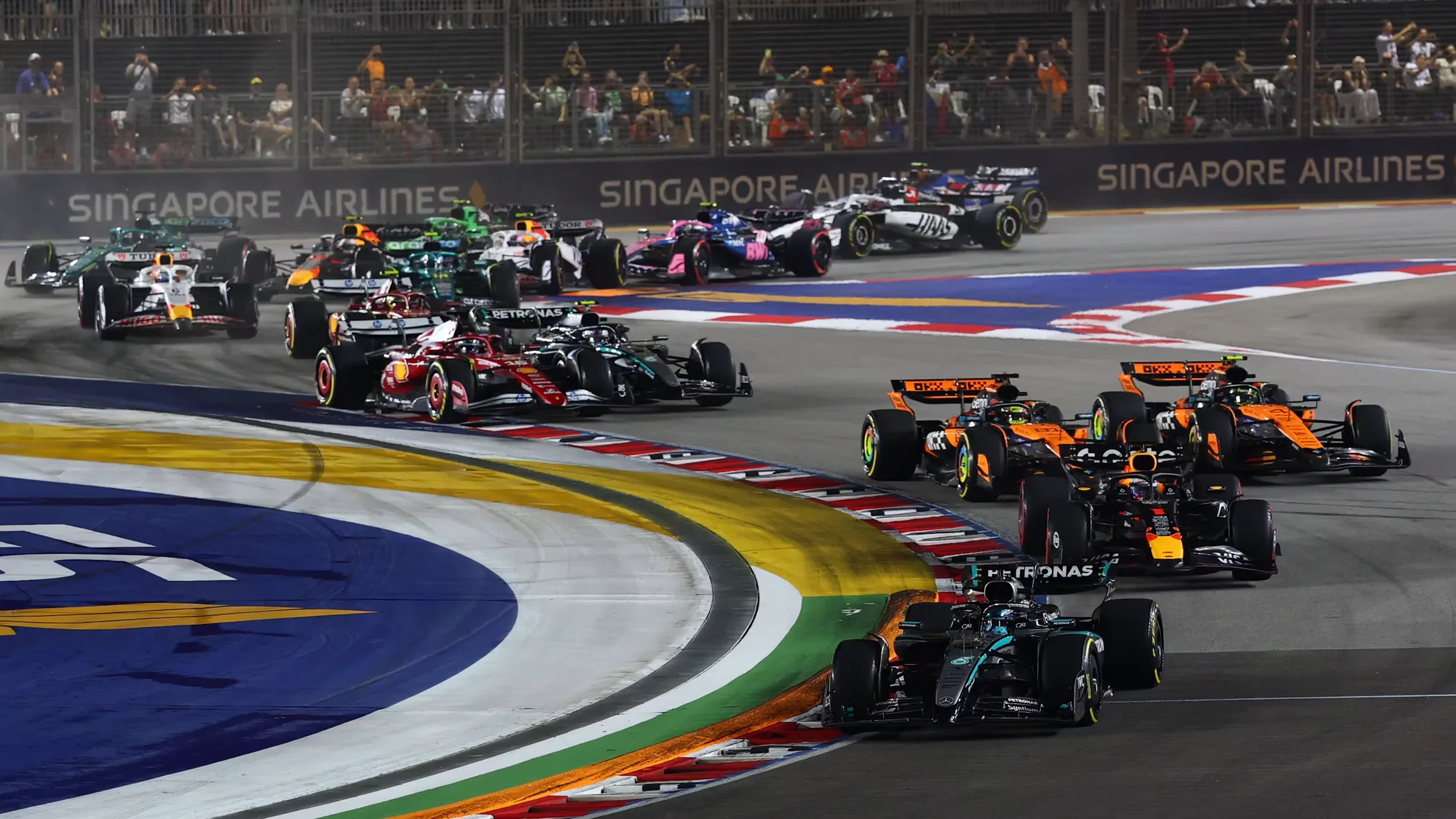
A month like no other
It’s worth looking at just how much is packed into this stretch of the calendar, because the overlap is what makes it special.
| Dates | Event | Who’s in town |
|---|---|---|
| 2 and 3 October | The Weeknd at the National Stadium | Tens of thousands of music fans, from Singapore and around the region |
| 5 to 11 October | TOKEN2049 Week, with the main conference at Marina Bay Sands on 7 and 8 October | Around 25,000 founders, investors and builders from 160 countries, plus more than 1,000 side events across the city |
| 7 October | Hans Zimmer Live: The Next Level at Singapore Indoor Stadium | Film and music lovers, for his first Singapore show since 2019 |
| 7 and 8 October | Forbes Global CEO Conference | Some of the region’s most senior business leaders |
| 9 to 11 October | Formula 1 Singapore Grand Prix, now with its first Sprint race | Racing fans, tourists and corporate hosts, with headline concerts every night |
| 12 to 15 October | Singapore International Cyber Week and GovWare at Sands Expo | Policymakers, ministers, technical experts and industry leaders |
Around and between these sit club nights, brand activations, hospitality suites, private dinners and side events by the hundreds, which means that for two weeks, Marina Bay and the city around it become something closer to a global festival ground than a business district.
The audience potential
The numbers alone are striking. Last year’s Grand Prix drew an official attendance of 300,641 over three days, with around 65,000 fans gathering at the Padang each night for the headline concerts, and this year’s race adds a Sprint for the first time. TOKEN2049 alone expects around 25,000 attendees from more than 7,000 companies, while GovWare, the anchor exhibition of Cyber Week, typically hosts more than 14,000 participants from over 90 countries. Singapore’s tourism board expects 17 to 18 million international visitors this year, and October is one of the moments that brings many of them in.
What makes this fortnight so interesting, though, isn’t the size of the crowds but the mix. In the same few square kilometres, you have crypto founders and fund managers, CEOs and senior policymakers, Gen Z concertgoers, families out for a weekend of racing and travellers who have flown in specifically for the occasion. Many are affluent, many are visiting from overseas, and almost all of them are in a mood to go out, spend, meet people and share what they’re doing. For brands in hospitality, food and beverage, retail, travel, fintech, technology and professional services, it’s rare to find so many valuable audiences in one place, already in the right frame of mind.
Carrying on as usual isn’t really an option
Most brands plan their marketing months in advance, and that’s how it should be. The problem comes when those plans are treated as fixed, running exactly as scheduled while the city around them is transformed. A campaign that would have worked perfectly well in a quiet week can disappear entirely when every feed, conversation and billboard in Singapore is focused on a handful of shared moments.
“It’s simply not enough to go ahead with your plans while ignoring what’s happening in the city. When everyone in Singapore is talking about the same few moments, a brand that carries on as if nothing is happening isn’t staying neutral, it’s becoming invisible.”
Michelle Teh, General Manager, LOKi Singapore
That doesn’t mean every brand needs to suddenly become a motorsport or crypto brand. It means recognising that the context your audience is living in has changed for these two weeks, and asking honestly whether your message, timing and channels still make sense within it.
Introducing the LOKi Moment Fit
Not every event deserves a response from every brand, and joining a conversation that has nothing to do with you can do more harm than staying quiet. The real question is where a moment, your brand and your audience genuinely meet. To answer it, we use a simple framework we call the LOKi Moment Fit. It isn’t just for F1 or for October, and it works for any moment that has the city’s attention, whether that’s a concert line-up, a conference, a festive season, a sporting weekend or a trend that’s suddenly everywhere.
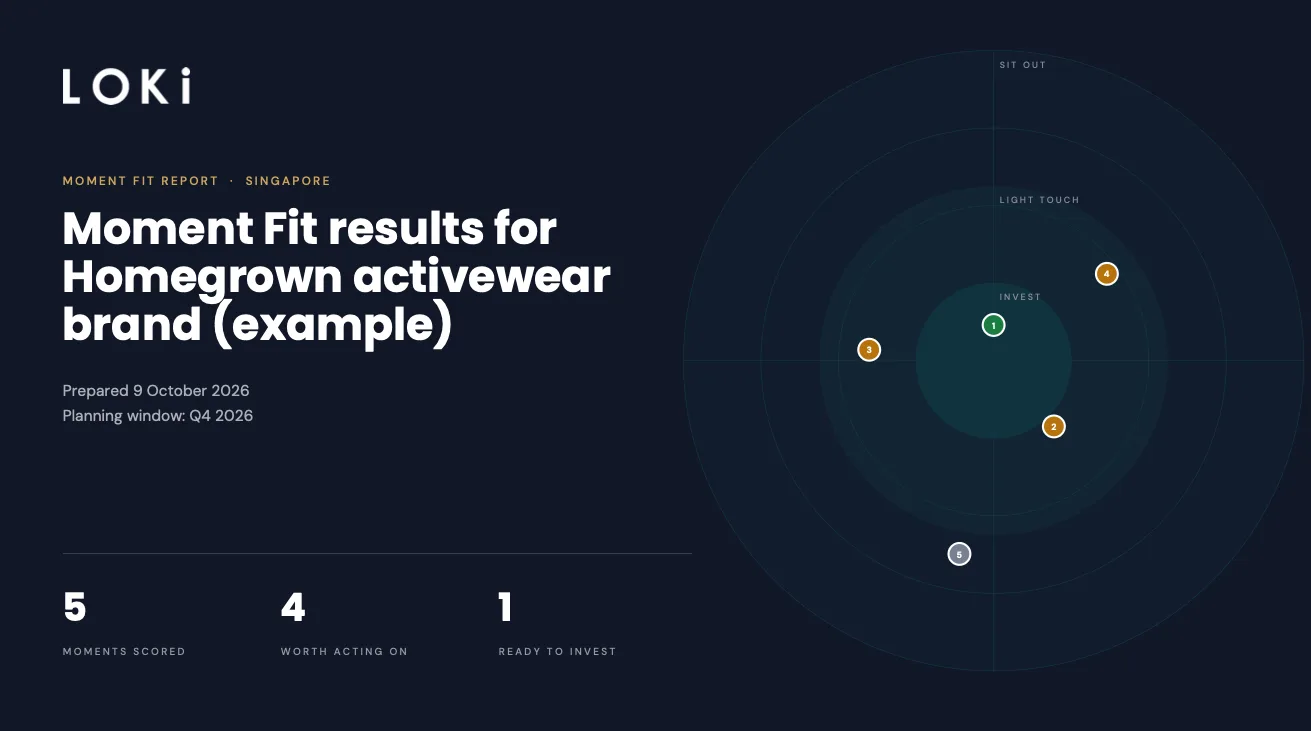
Step 1: Map the moments
Start by listing everything happening in the city during your window, including events, activities and trends, and then look beneath each one for the themes it carries. A moment is never just its name. The Weeknd’s concerts are about music, nightlife and fandom, TOKEN2049 is about the future of money, risk and community, Hans Zimmer is about cinematic emotion and awe, the Forbes Global CEO Conference is about leadership and ambition, the Grand Prix is about speed, precision, nightlife and glamour, and Cyber Week is about trust and security. It’s these themes, not the events themselves, that a brand can credibly connect with.
Step 2: Be clear on your brand values
Next, write down the three or four things your brand genuinely stands for, in plain words. These are the filter for everything that follows, because a moment is only worth joining if one of its themes sits naturally alongside one of your values.
Step 3: Understand your consumers’ interest
Then look at the moment through your audience’s eyes. Are your customers attending, watching from home, avoiding the crowds or simply hearing about it everywhere? What do they need, want or feel during this period? The same event can mean excitement to one audience and traffic jams to another, and both can be an opening for the right brand.
Step 4: Find the intersection
With all three in view, score each moment against four simple measures, rating each from 1 to 5.
| Measure | The question to ask |
|---|---|
| Brand fit | Does one of the moment’s themes connect naturally with one of our values? |
| Audience overlap | Are our customers part of this moment, or genuinely interested in it? |
| Conversation strength | How much are people talking about it, searching for it and sharing it? |
| Room to act | Can we take part credibly, within our budget, timeline and the organisers’ rules? |
A score of 16 or more out of 20 is a moment worth investing in properly. A score between 11 and 15 suggests a lighter, more targeted response, while 10 or below usually means it’s better to sit this one out and save the budget for a moment that fits.
Step 5: Develop your keywords
Once you’ve chosen your moment, build a set of keywords from the intersection, using the language your audience actually uses rather than the event’s official name. For a race weekend, that might include words like night race, race weekend, Marina Bay, after-party, recovery or road closures. These keywords guide your content, your social copy, your search and paid targeting, and they help you stay part of the conversation without borrowing anyone’s trademarks.
Step 6: Set the mood that resonates
Every moment carries an emotional tone, and the brands that land best match it. A stadium concert by The Weeknd feels euphoric and electric, a Hans Zimmer night feels cinematic and awe-inspiring, TOKEN2049 feels ambitious and future-focused, the CEO conference feels considered and authoritative, the Grand Prix weekend feels exhilarating and glamorous, and Cyber Week calls for reassurance and trust. Choosing the right mood shapes the visuals, the music, the copy and even the timing of your content, and it’s often what makes a brand feel like it belongs in the moment rather than gatecrashing it.
Step 7: Develop the strategy
Only now does it make sense to decide what to actually do. Depending on the score and the mood, that could mean being genuinely useful to people around the moment, creating content that captures its spirit, hosting a small side event of your own, partnering with a venue or hotel, or simply being ready to react when something unexpected happens. The strategy should follow the intersection, not the other way round.
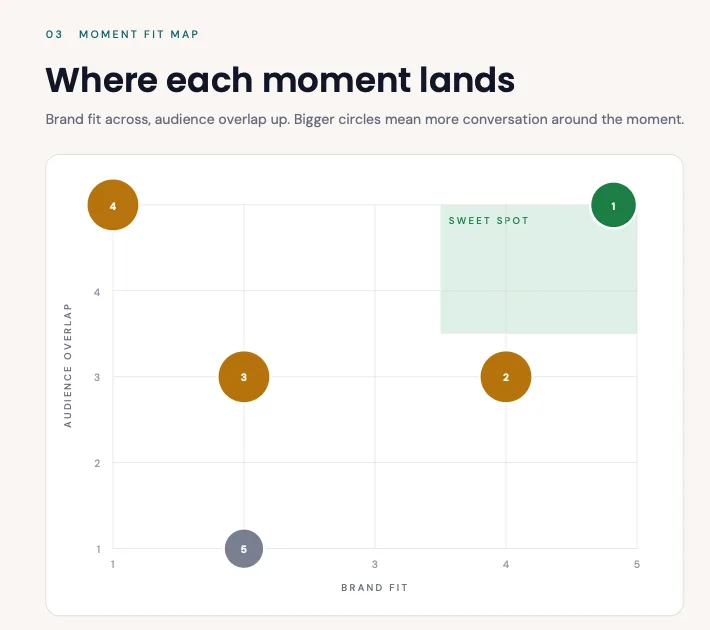
Reach out to us now and develop your very own LOKi moments report to complement your marketing plans.
Plans that move with the city
October is a reminder of something that’s true all year round in Singapore. This is a city that runs on moments, from concerts and conferences to festive seasons and national celebrations, and the brands that do best are the ones whose plans are built around those moments rather than in spite of them. That starts with having the city’s calendar on the table when the marketing plan is written, and leaving enough flexibility to respond when something unexpected captures everyone’s attention.
At LOKi, this is exactly how we like to work. Sometimes we’re the creative team shaping an idea that captures the mood of the moment, sometimes we’re managing the media so it reaches the right people at the right time, and often we’re doing both, end to end. Whichever role we play, we help brands look up from their own plans, see what’s happening around them and find a natural, credible way to be part of it.
If you’d like to make more of Singapore’s big moments, whether it’s this October or the next one on the calendar, get in touch with us. You can also see some of our work or find out more about LOKi.
Frequently asked questions
What is moment marketing?
Moment marketing means shaping your content, media and activity around what your audience is already paying attention to, such as a major event, a concert line-up, a festive season or a fast-moving trend. Done well, it makes a brand feel relevant and present. Done badly, it feels like a brand jumping on a bandwagon it doesn’t belong on, which is why finding the right fit matters so much.
How do I decide which moments my brand should be part of?
Use the LOKi Moment Fit to find the intersection between the moment’s themes, your brand values and your audience’s interest. Score each moment from 1 to 5 on brand fit, audience overlap, conversation strength and room to act, then treat 16 or more out of 20 as worth investing in, 11 to 15 as suited to a lighter response and 10 or below as usually best left alone.
How far ahead should I plan?
It helps to think in layers. Map the year’s major moments when you set your annual marketing plan, so they’re factored into budgets from the start. For the moments that score highest, begin developing the strategy, creative and any partnerships around three to six months ahead, since venues, media placements and good collaborators get booked up early. Around four to six weeks out, finalise your content, keywords and media plan, and agree your tone, guardrails and approvals so the team can react quickly. During the moment itself, aim to respond within hours rather than days, and within a couple of weeks afterwards, review what worked so the next moment starts from a stronger place.
How do I build keywords for a moment?
Start from the themes where the moment meets your brand, then listen to how your audience actually talks about it on social media, in search and in conversation. Favour the everyday phrases people use over official event names, which are often trademarked, and use those keywords consistently across your content, social copy, search and paid targeting.
How do I know whether joining a moment worked?
Set a clear objective before you start, whether that’s awareness, engagement, footfall, enquiries or sales, and note where those numbers stand beforehand. Comparing results during and after the moment against that baseline shows whether it was worth it, and feeds directly into how you score the next one.
What if my brand doesn’t fit any of the big moments?
That’s completely fine, and it’s often the smartest outcome. Sitting a moment out frees up budget and attention for the ones that genuinely fit, and some brands do better by creating their own moments, such as a launch, an event or a seasonal tradition, that their audience comes to look forward to.
Can brands market around big events without being an official sponsor?
Yes, as long as they don’t use official names, logos or imagery, or imply an association they don’t have. The safest and often most effective approach is to focus on the wider mood and the moments around the event, and to check the organisers’ guidelines before launching anything that references it.
How can LOKi help brands plan around Singapore’s big moments?
LOKi is an independent digital creative agency working with brands in Singapore. We can help you apply the LOKi Moment Fit to your calendar, then lead the creative, manage the media or take care of the whole campaign end to end. You can explore our work here, find out more about us or start a conversation about your next moment.